Last updated on
Hail damage doesn’t have to come from a roof caving in to cause the damage. In Oklahoma City, the costliest damage from a storm can begin with “nothing to see here” damage—minuscule bruises on roofing material, loose flashing, loss of granules that resemble normal aging. Property managers and owners are left caught in the middle, as tenants demand answers and insurance companies demand proof of damage, all while the roof continues to deteriorate with each subsequent storm.
McCann’s Roofing handles hail damage the way Oklahoma weather requires: as a system issue, not a repair request. The difference is evident in the inspection, documentation, insurance communication, and material selection that follows.
Hail Damage Isn’t Always Obvious at First
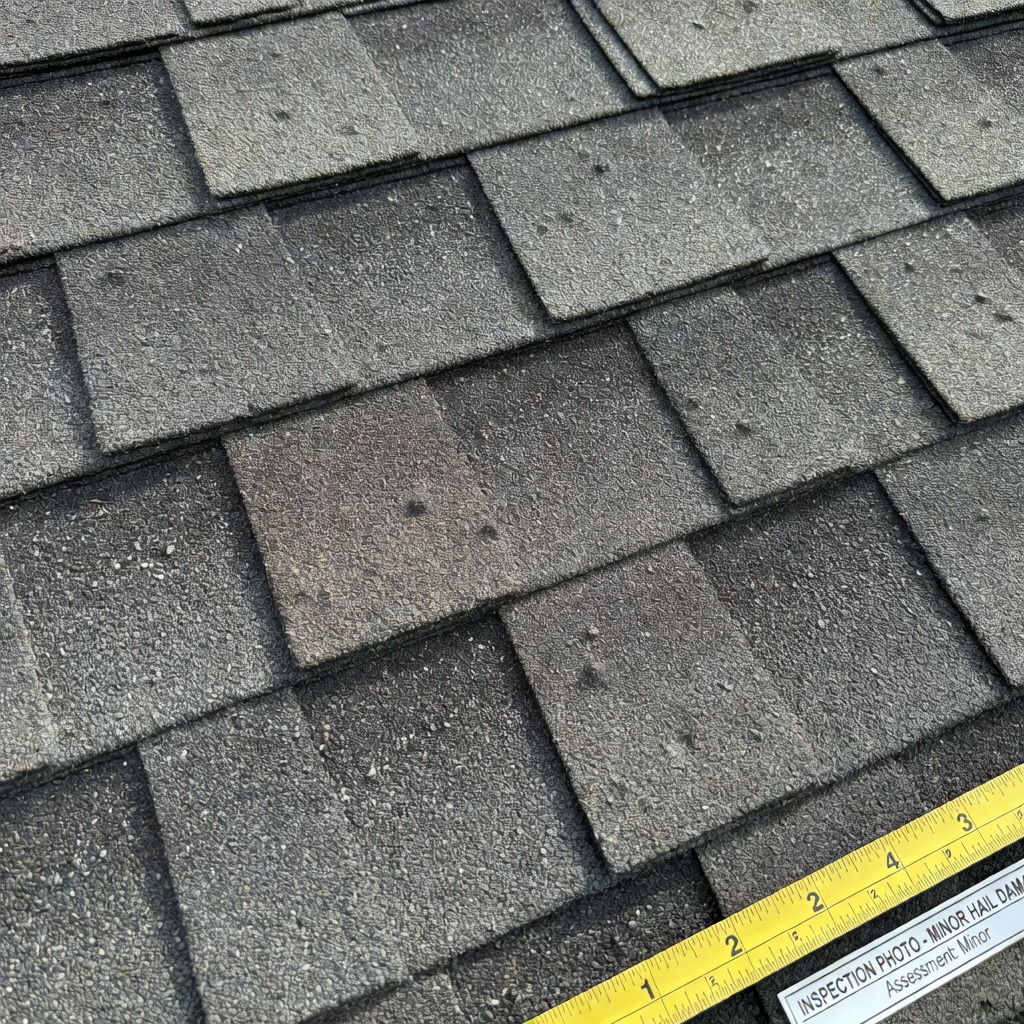
Hail damage is rarely just “spots.”
Hail is rarely a uniform strike. Two sides of the same building can have entirely different stories to tell, depending on wind patterns, roof slope, nearby trees, and even roof-mounted equipment that alters the ice strike. A cursory look from the driveway or a simple ladder check can easily miss the point. For a facilities manager responsible for multiple roofs, this mistake can have multiple consequences: one misinterpreted storm can lead to budget shocks, interior maintenance requests, and tenant complaints months down the line.
McCann’s begins by interpreting hail as a map rather than a puzzle. The aim is not to “repair” or “replace” in haste, but to distinguish what’s been altered by the storm from what was already present. This allows building owners to make informed choices that will withstand the next storm’s approach—and the subsequent review of the claims file.
Inspections that catch the hidden failures
In the case of hail damage, the visible problems are not necessarily the most hazardous. A roof shingle can appear to be in good condition even if its protective layer is damaged. Flashing can be disturbed enough to allow water to flow behind the siding or into an attic edge. Gutters and downspouts may not be damaged enough to collapse, but dings can alter water flow and create overflow points during a heavy downpour.
McCann’s relies heavily on the value of complete, no-cost inspections because Oklahoma roofs don’t fail with warning. They fail during the next storm, the next freeze/thaw cycle, or the next windy day when what hail damage already weakened is lifted. For commercial pitched roofs and residential roofs as well, that “secondary failure” is what property managers ultimately pay for—often in areas well removed from the original damage.
Documentation built for real-world claims
Most hail disputes don’t come down to whether it hailed. They come down to whether the damage is clear, attributable, and consistent with storm impact. That’s where many contractors fall short: vague photos, generic notes, or a report that reads like a template. Insurers may initially accept the claim, then push back when the scope expands, or interior issues arise.
In the second phase of the process, McCann treats documentation like a deliverable, not a formality. McCann’s Roofing & Construction – Oklahoma City Roof Experts is often brought in when owners want an inspection record that can stand up to scrutiny, with clear findings tied to roof components and storm-related symptoms. That approach helps reduce back-and-forth, keeps timelines tighter, and gives building owners a cleaner paper trail for their capital planning.
A local stance against storm-chasing chaos
Oklahoma storms bring storm chasers, just as open dumpsters bring raccoons. They show up quickly, fix quickly, and leave quickly—often before the first punch list is finished. For multiple property owners, the problem isn’t just subpar work; it’s risk. Who gets blamed if the leak comes back? Who gets the call if a warranty issue arises? Who can answer the insurance company’s questions about the project scope?
The key to McCann’s advantage in this area is straightforward: they’re local, established, and accessible. With offices in the OKC metro and surrounding regions, they’re more like a long-term business partner than a storm chaser. For building owners, this means fewer surprises and a clearer line of sight if something needs to be addressed.
Insurance coordination without the runaround
The insurance work can become a second job for property managers. The adjusters’ schedules, requests for documentation, the need for tenant access, follow-up inspections, and negotiations over the scope of work can drag on for weeks. During this time, the roof remains vulnerable to wind-driven rain and additional hail.
McCann’s strategy is to keep the claim manageable by verifying storm damage, aligning the results with what adjusters need to verify, and helping the owner with the documentation needed for a smooth process. They also stress a clear payment policy with no-pressure timelines and a process that is intended to move forward once the scope is agreed upon between the insurer and the owner. This is important for facility managers who must report back up the chain and keep projects moving without turning every roof into a quarterly event.
Material choices that match Oklahoma’s punishment
Hail is not a one-and-done occurrence in this region. It’s a regular stress test. Therefore, “good enough” roofing materials can quickly become “not enough” after a couple of years of hail, sun, and strong winds. The roofing system must withstand not only hail damage but also the brutal summers that can cause shingles to degrade and become brittle.
McCann recommends materials that have been shown to withstand impact and motion, such as Class IV impact-resistant shingles or SBS-modified impact-resistant shingles, if the building objectives and budget allow. These materials can reduce the risk of damage from repeated storms and, in some instances, may be considered in the policy’s insurance premium calculations. More importantly, they can help the building owner escape the cycle of repairs every storm season.
Repair versus replacement: a disciplined decision
Among the most expensive errors, after hail damage, is improper scope selection. When a repair becomes a replacement, it can lead to ongoing leaks, damage to the building interior, and ultimately a higher total cost. When a replacement is unnecessary, it can exhaust capital budgets and cause unnecessary disruption.
McCann’s differentiation comes from considering scope as a decision tool. They consider the extent of the hail damage, the age of the roof, the decking, the ventilation, and the likely future exposure. In commercial pitched roofs with asphalt shingles, this consideration is particularly important because it can help avoid patching large areas of the roof, which can lead to performance variability and future problem areas.
Installation standards that don’t invite callbacks
Hail damage will also expose poor installation workmanship that was already on the verge of failure. Poorly sealed penetrations, substandard flashing, and poor transitions can easily turn a hail-damage situation into a water-intrusion situation, even if the roof “looks fine.” When moisture enters insulation, decking, or interior finishes, the cost of damage rises quickly.
McCann’s relies on sound craftsmanship principles: proper flashing, clean lines, accurate sealing, and attention to areas of the roof system that don’t photograph well but are critical to performance. They also stress the importance of strong manufacturer relationships and warranties, which are crucial for owners who want to understand the specifics of coverage and accountability after the work is done.
A steadier path after the storm
The hail will just keep on coming. The question is, does your response process bring order or more chaos? A roof that appears “okay” can still be damaged, and a claim that begins well can still go off the rails without a clear definition of proof and scope.
McCann’s philosophy is unique because it focuses on long-term results and accountability rather than short-term band-aids. From free inspections to thorough storm damage assessments, insurance claims, and hail-resistant materials, they act more like a hometown ally who cares about the outcome. For property managers, facility managers, and building owners in the Oklahoma City area, it is this kind of process-driven thinking that makes hail season a predictable part of doing business.
More Like This

 Buying Stylish and Trusted Wholesale Cabinets in San Diego: Expert Tips for Quality and Value
 How to Design a Home Inspired by Dubai’s Waterfront Architecture
 How Designers Can Hide Vents, Ducts, and HVAC Units Without Compromising Performance
Recap